
Yesterday, I stepped outside my comfort zone. And it felt uncomfortable. Very uncomfortable.
I was invited to give a ten-minute talk at an online workshop for early career researchers about journal publishing, drawing on my experience as the managing editor of the interdisciplinary journal Memory Studies. I hesitated at first: the odd imposter syndrome kicked in, plus I realised I hadn’t given a public talk in like 10 years. But I decided that I had to step outside my comfort zone – and oh boy, did I step out of it!
I spoke for far too long and chaotically. The worst part came when we were split into groups in breakout rooms. I believe the idea was for the organisers to join the three groups and act as moderators, but mine was called away for a family emergency, leaving me alone to discuss five abstracts with their respective authors. I hadn’t prepared for that AT ALL.
To be fair, the abstracts had been circulated in advance, but I hadn’t understood from the instruction email that I was supposed to assess them and then share my thoughts with the participants. As improvisation is not one of my strengths, I decided to continue with the Q&A session that we had ended the first part of the workshop with. It’s hard to fill 40 minutes when there is very little ‘Q’, though. I don’t blame the participants, of course. They were expecting feedback on their abstracts, which they had perhaps written especially for the event, and I completely failed to deliver on that.
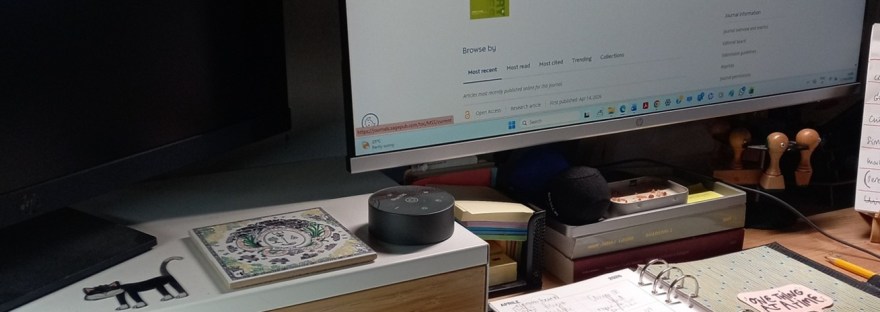
Needless to say, I quickly found myself at the complete opposite end of the comfort zone spectrum. I broke out in a sweat as I tried to pull together a discussion. After a few badly answered questions and several awkward silences, I was eventually allowed to return to my safe haven: my sweet little office!
Although the workshop put me in an uncomfortable position, I’m glad (and proud) I took part in it. Stepping outside your comfort zone enables you to look at yourself from the outside: you see who you are, what your limits are and how you can work to overcome them. In short, it forces you to reflect on your professional development, which is always worth sweating over.


