
Subscribe to continue reading
Subscribe to get access to the rest of this post and other subscriber-only content.

Kind, creative & customised editing for the Humanities and Social Sciences
Subscribe to get access to the rest of this post and other subscriber-only content.

New round of posts about the “fabulous four” core activities in academia: writing, teaching, research, and dissemination. Episode 4: teaching.
Covid-19. A curse, or an opportunity to change the endemic casualisation of higher education?
It’s no secret that the UK’s higher education system heavily depends on temporary staff. I’m sure you’ve all had to plough through job offers to find anything that wasn’t a ‘part-time’, ‘fixed-term’, or ‘zero hours’ contract.
A survey conducted by the University and College Union (UCU) in early 2019 estimated that “around 70% of the 49,000 researchers in the [higher education] sector remain on fixed-term contracts”, whereas 37,000 teaching staff was found to be on fixed-term, hourly paid contracts (p. 3).
And these are only the official numbers: a further 71,000 – again, mostly hourly paid – teachers are apparently employed as ‘atypical academics’ but without being counted in the main staff record. UCU also estimated that “most universities rely on hourly paid staff to deliver around 25% of their undergraduate teaching” (p. 8).
What is perhaps most disconcerting is that this situation involves some of the most prestigious universities in the country: “In 2016/17 there were 71,960 atypical academics employed in UK universities, 50% of whom were employed in the ‘elite’ Russell Group of universities” (p. 7).
Needless to add that these atypical academics included many PhD students. In fact, there’s a real hunt for casual workforce in higher education, and PhD students seem to be the easiest prey, eager as they are to gain teaching experience and, hey, who knows, maybe even get a foot in the door. Money is also an issue, especially for unfunded students.
As much as I support the idea of offering students the opportunity to gain teaching experience during their PhD, most of the time it only reflects a department’s need to resolve structural problems. This is hardly good for its stability and continuity, and potentially damaging for the PhD students, who will likely find themselves struggling to complete their PhD within the set timeframe.
Universities also don’t always give PhD students proper training before they enter the classroom, which can impact on the quality of teaching, and potentially on the students’ self-esteem.
Last but not least, allowing only some PhD students within a department to teach can create hierarchies between students, with some having access to an office while others are forced to roam computer rooms and libraries in search for a study space.
This can be highly exclusionary. I didn’t teach during my PhD, and had no access to office space or staff printing services. When I once had to ask a fellow PhD student and teaching assistant for the printer/copier code (to assist a conference attendant), she snobbishly walked off to make the photocopies herself. The thought that she was worried I might make improper use of her code deeply saddened me.
Early career researchers are another easy target. I had to teach up to 5 hours per week as part of a 3-year postdoctoral fellowship. I won’t say I was exploited, but I did spend a hell lot more than 5 hours on my teaching: course design and preparation, exam supervision, oral examinations, marking, honours supervision, feedback forms – it was a lot more than I had bargained for! By way of expressing gratitude, the department eventually forgot to mention me in a list of recently departed staff, in a School Newsletter published shortly after my fellowship ended. As if I’d never been there.
If this is the status quo, then just imagine the situation now, with the Coronavirus raging across the globe. What has been a long-term problem is now exploding in everyone’s face. Permanent staff is forced to shift to online teaching or being furloughed, something that isn’t guaranteed though for casual workers on short-term or zero hours contracts.
The universities of Bristol, Newcastle and Sussex set a sad record in this perspective, as they made staff on fixed-term contracts redundant, or simply did not renew their employment.
The crisis is also affecting young researchers, with funding schemes or job vacancies being cancelled “due to Covid 19”, for example. Fortunately not all funding bodies resort to these extreme measures: the British Academy has just published its call for BA/Leverhulme Small Research Grants 2020-21, extending the latest project start date in order to provide flexibility in response to the Covid-19 pandemic.
It is difficult to predict how this will all work out. Some universities seem to be taking on a more responsible attitude, and the UK Research and Innovation (UKRI) has just announced that funded doctoral students who have been impacted by Covid-19 will receive an extension to their research with additional grants, to complete their studies by 31 March 2021. There are also various petitions calling for more sustained support of casual workers (here’s one from the @CoronaContract).
Obviously the emergency situation requires immediate action, which may not have a long-term impact. Still, if the academic community manages to keep the pressure on government and institutions way beyond the crisis, perhaps Covid-19 could have some positive outcomes as well.
In the meantime…maybe it would be an idea to set up a platform (a blog, a webpage) where people can post their experiences of cancelled job interviews, funding schemes, and so on. It might give a clearer indication of the vastness of the problem, and perhaps offer a starting point for a nationwide campaign against the endemic casualisation of higher education in the long run.
***
More reading:
After the pandemic: re-imagining our universities (Medium)
Lecturers went on strike over insecure jobs – now we fear coronavirus cuts (Guardian)
Managing research risks – riding the wave of #phdpandemic (by Pat Thomson)

***
Previous post about teaching:
[Please note this offer has, in the meantime, expired]
Being a former winner and special issue guest editor of Modern Italy (the journal of ASMI, the Association for the Study of Modern Italy), I can help bring your submission into excellent shape for the ASMI 2020 Postgraduate Essay Prize.
Proofreading includes corrections of grammar, syntax and punctuation (following the journal’s style guidelines), content check and, if necessary, rewriting of author voice and style (at an extra cost).
10% discount on proofreading – 15% discount on translation
For inquiries contact me via the module below.
About the competition:
Every year, the ASMI Postgraduate Essay Prize is awarded to an outstanding piece of unpublished work by a postgraduate student, dealing with modern Italian history, society or politics from c. 1780 to the present.
Articles should not exceed 8,500 words (incl. notes and references).
The award money is £300.

New round of posts about the “fabulous four” core activities in academia: writing, teaching, research, and dissemination. Episode 3: dissemination.
Tackling the peer review system
A few years ago, the renowned scholar Mieke Bal made a provocative call to abolish the peer review system. Don’t hold your breath: it’s not likely to happen. As pressure to produce 4* publications increases, the peer review system will continue to be adopted widely.
This is why it is essential that you take the time to prepare yourself, and your manuscript, for publication, regardless of the fact that the peer review system is problematic, or perhaps precisely because it is!
In this blog post I want to offer a short, practical guide on submitting articles to peer-reviewed journals, based on both my experience as a published author and as a journal editor.
Lesson 1: Know your reviewer
Nowadays most academic journals draw on the expertise of peer reviewers in their selection of manuscripts deemed worthy of publication. They will assess the quality of your article, as well as its suitability for publication in the selected journal. Their feedback will eventually form the basis of the editor’s decision.
So how to get off to a good start?
Lesson 2: Patience is the magic word
The peer review can take a really long time, so don’t expect quick answers or decisions. Here are a few factors that determine the length of the process:
If the process is delayed for any of these reasons, there’s not much you can do, except one thing: when resubmitting a manuscript, always provide a detailed list of changes you’ve made. This will save both editors and peer reviewers time when reassessing the quality of your manuscript in further rounds.
It’s also fine to contact the editor to ask for an update, but please don’t harass them!
Lesson 3: Dealing with negative criticism
Peer review reports can be painful and even devastating, and Professor Bal is right to point out the problem of “grudge-bearing scholars” destroying articles just to get back at someone, although I wonder how common this really is.
In my experience reports are generally quite helpful, also because most journals will gather multiple reports, so even if you get one very short piece of feedback, the other reviewers will usually make up for this lack.
Still, if you get negative criticism, don’t take it to heart. Put aside your pride and try to learn from it. This doesn’t mean that you have to accept anything the reviewer says; if you can motivate your choices or defend your position, you don’t necessarily have to apply the suggested changes.
Do, however, carefully read and reflect upon the comments, and most of all, never dismiss the reviewer’s opinion. It won’t get you anywhere and you will not make a good impression on the journal editors.
Last but not least: show gratitude, even if you’re boiling with rage! Peer reviewers take out valuable time to read your work, usually with tight deadlines, and most of the time they will help you improve it, so acknowledge that.
***
For more advice, tips and encouragement, check out these online resources:
Dear anonymous peer-reviewer, your criticism made me a better researcher (Guardian, Academics Anonymous)
I’m writing a journal article – what literatures do I choose? (by Pat Thomson)
15 stepts to revising journal articles (LSE blog)

***
Previous post about dissemination:
New round of posts about the “fabulous four” core activities in academia: writing, teaching, research, and dissemination. Episode 2: research.
Breaking out of the cocoon that is called a PhD
The topic of mental health in higher education is usually debated in relation to the rising number of mental health incidents among students, or the growing stress levels experienced by staff.
The Guardian, for example, recently revealed how “British universities are experiencing a surge in student anxiety, mental breakdowns and depression”. The topic gained media attention after a series of suicides affected one university in particular, between 2016 and 2018, although it appears to be a more widespread phenomenon.
Similarly, workloads have become unmanageable for many academics, having to juggle their time between teaching, marking, course development, board meetings, examining theses, producing 4* publications, grant income, and so on. In fact, staff increasingly falls back on counselling and occupational health in universities, as a recent HEPI report by Dr Liz Morrish, entitled Pressure Vessels: The epidemic of poor mental health among higher education staff, has shown.
Who tends to be overseen in this context is the PhD student. Embarking on a PhD project is exciting: you’re at the start of a – hopefully great – career, maybe you’ve won a PhD studentship, or your university is highly ranked. BUT, it can also be really daunting: you need to produce something good now, become an expert in your field, and you have to do it all by yourself.
In sum, doing a PhD can be empowering, but it can also shred your self-confidence. Competing fellow students. Insensitive dinosaur-professors slagging you off at conferences. Pressure being put on you to finish your thesis on time. Feeling cut out when you can’t join your peers because you’re having to work on the side.
Sure, you have a supervisor, but they won’t be holding your hands, or chasing you up. You have to learn how to manage your time, develop research skills, and write academically.
Now it’s OK to make mistakes. Like I replied to one of my proofreading clients, when she apologised for her “crappy” writing: it’s a PhD student’s prerogative to write in a crappy way. For the record, she got the highest score in quality of written English, and she didn’t only have my proofreading skills to thank for it.
Nevertheless, a PhD puts a lot of pressure on people. It can be daunting.
Doing research – be it in a public archive or at home – and writing a thesis is generally a solitary routine, which can be thoroughly demotivating, especially if you don’t have an office to go to.
I used to migrate between home, library, and computer rooms (regularly leaving behind my pen drive), and I remember how it made me feel lost. I was the only new PhD student in my year, and those who had started their PhDs in previous years were all teaching, or doing it part time. I hardly ever saw them, and we never organised anything as a group.
This is another issue: PhD isolation also prevents you from confronting your research with other people, and as a result, it’s harder to grow as a scholar. Talking about your project, what it’s about and why it’s so interesting, can help you clarify your ideas, maybe even open your eyes to things taken for granted, or that skipped your attention.
So if you risk being isolated during your PhD, here’s five practical tips on how to break out of that cocoon:
Now all this might not be your thing. Maybe you’re perfectly happy working from home, and your weekly yoga class is all you need to satisfy your socialising needs. Maybe your PhD community includes someone like Sheldon from the Big Bang Theory, and you rather have a quiet lunch on a bench outside, taking advantage of a beautiful autumn day.
That’s fine. As long as you develop a routine that you’re comfortable with.
***

***
Previous post about doing academic research:

New round of posts about the “fabulous four” core activities in academia: writing, teaching, research, and dissemination. Episode 1: writing.
Commas save lives
I recently discovered that 24 September is National Punctuation Day. Well, in the States it is. Yes, people actually celebrate punctuation! A certain Jeff Rubin launched it, and even designed a website, which is all about punctuation: rules, gadgets, games.
I guess fetishes come in all shapes and sizes.
Right, I’m taking the mickey out of poor Jeff. Actually, punctuation is quite important. If you look up #PunctuationDay on Twitter, you get a string of Tweets featuring tons of examples of punctuation gone wrong.
The most popular seem to be in the line of “Let’s eat grandpa” or “Let’s eat grandma”. Not sure why grandparents are such popular objects in these examples, but it does prove a point: commas save lives.
In my job as a proofreader, some of the errors I most regularly encounter regard punctuation. In this blog post I want to have a closer look at commas. As easy as they may seem, they are the most common sources of punctuation errors.
So here are my top 3 tips on how to use commas correctly:
I did the exam, and I went down to the pub.
Only leave out the comma when the subject is omitted before the second verb (“went”):
I did the exam and went down to the pub.
What’s important to remember is that commas can’t join clauses by themselves, as in this sentence: I did the exam, I went down to the pub. Here it’s best to just use a conjunction word (“and”). In other cases you might need to do more, like splitting the sentence up using a period or a semicolon.
I had wine, cheese, and crackers.
Note that I’ve added a comma before “and”. This is called an Oxford (or serial) comma, and it’s used a lot in the US – less in Britain. It serves to avoid ambiguity, especially if the list already contains conjunction words. For example, in this sentence “and” is used twice: I had wine, cheese and crackers and strawberries.
As a result, it’s not clear whether cheese, crackers, and strawberries represented one dish, or were eaten separately. You wouldn’t eat a cracker with cheese and a strawberry on top, would you? If we add a comma after “crackers”, though, the situation is clearer:
I had wine, cheese and crackers, and strawberries.
Awe, brings back so many good memories of conference drinks…
Libraries, which are full of dusty bookshelves, aren’t my cup of tea.
If we were to remove “which are full of dusty bookshelves”, the meaning of the sentence as a whole – namely that you don’t like libraries – doesn’t change. It’s not essential information, so you would use a comma to set it off from the rest of the sentence.
Things change when you’re dealing with an essential clause, also called a restrictive clause (because it restricts the noun):
I don’t like libraries that look like coffee lounges.
The restrictive clause “that look like coffee lounges” says you don’t like a certain type of library, not that you don’t like all libraries. You do, just not this kind of library! In other words, the restrictive cause gives relevant information, and without it the meaning of the overall sentence changes. It’s integral to the sentence, so it can’t be set off by commas.
So you see, commas should never be underestimated, and must be used wisely and responsibly. Not just for the sake of poor old grandma.
***
For more detailed explanations, examples and tests, check out these online resources:
University of Bristol grammar tutorial (followed by quiz)
Punctuation slide show (by William E. Sledzik)

***
Previous post about academic writing:
My latest article, for the Coffee & Cocktails podcast, on the need for universities to reassess their ethics and safety policies before allowing academics to go out into the field. Enjoy!
Some years ago, I was gathering interviews for a project on Italian feminism. At one point I contacted a feminist association in Milan, which was running a crowd funding campaign for the launch of a women’s centre. I interviewed one of the project’s promoters, and at the end she gently suggested that I could perhaps use some of my funds to support their cause. I tried to explain, somewhat embarrassed, that grant money is meant to cover research costs and expenses only, and I half promised to apply for some other grant, knowing it would never come through.
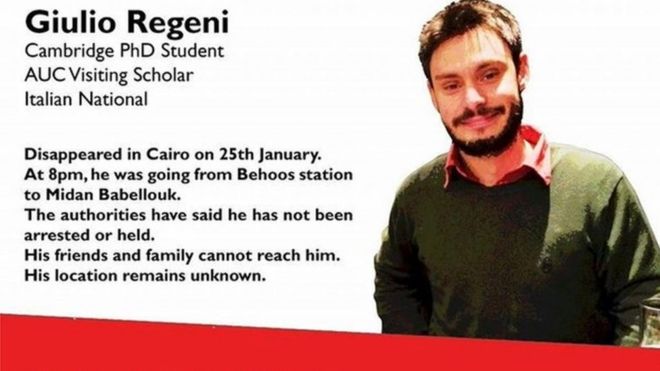
In about the same period Giulio Regeni, a doctoral student from Cambridge University, went missing in Cairo. It was the fifth anniversary of the uprising against Hosni Mubarak. I instantly got a bad feeling. Students rarely go missing like this, don’t they? A few days later his corpse – showing signs of…
View original post 639 more words
Fourth and last (for now) in a series of posts, all drawn from my own – often suffered – experience of the academic world, about the “fabulous four” core activities in academia: writing, teaching, research and dissemination (in random order). Episode 4: teaching.
Lest we drown in student feedback
(warning: this blog post contains a rant)
Not long ago I stumbled upon a heated discussion on Twitter, regarding plans of the University of Leeds to implement an anonymous student feedback plan. I couldn’t access the article reporting this fact (wasn’t bothered to pay the subscription fees, sorry), but apparently module leaders would need to respond to the anonymous student posts on the discussion board within five working days. Sure, why not just install self-flagellation poles in every faculty building. Mea culpa, mea culpa, mea culpa.
In the debate, people particularly expressed their concern about teaching staff being confronted with anonymous attacks upon their gender, ethnicity, class, physical appearance and clothing choices, even their teaching style.
They’re not exaggerating. Research has shown that the ethnicity of teaching staff can affect the outcomes of student feedback, which in the UK is gathered mainly through the National Student Survey (NSS). I have also heard accounts of students complaining about too much feminism, for example. I love this reply from the author of an Academics Anonymous article on the topic:
The course content reflects academic research and theory on the subject and is not up for discussion. My response to the […] feedback was to include more content on feminism, not less.
Student feedback is not always useful. Given that participation is voluntary, response rates tend to be low, and when it is made compulsory things get worse: students are asked to comment on a course they might not have attended, or they just didn’t like the topic, leading to useless comments like the one cited above. Let’s face it: students don’t necessarily know how to assess teaching. We might just as well introduce HappyOrNot smiley terminals across campus, like those at airports or public toilets.
In my own experience, the whole student feedback business seems to be mostly a matter of ticking boxes and scoring high in the NSS. In fact, one university department was even caught instructing students to falsify their approval ratings, telling them that nobody would want to employ them if the responses were negative.
Yep, once more it all comes down to rankings, numbers, assessments. What is it about universities always wanting to score highest, or be the best? There’s even such a thing as the Top 20 UK University Campus Awards, which in my opinion have been more beneficial to building, furniture and gardening industries than for students and staff alike.
Let me tell you just this one anecdote, about a criticism I got on a grammar rehearsal class I ran in the last year of a 3-year postdoctoral fellowship. The purpose of the course was to repeat grammar topics the students (in their second year) had studied the previous year. They had to buy a textbook, from where we selected topics and exercises, and then I added some exercises of my own, occasionally also using songs and other, unconventional sources—y’ know, to make it all a bit less boring.
So basically I would refresh their memory by briefly explaining the topic, using the whiteboard, and then we would do exercises. If the topic covered multiple lessons I would do a brief recap. As they say, repetita iuvant. Additionally, I told students where to find the grammar rules explained in the textbook, and I had published a schedule on Moodle, the university’s online learning platform, with the weekly topics listed. In sum, anyone who missed class could stay on track.
In theory.
In practice, they didn’t. Quite a lot of students, in fact, skipped class every other week or so, especially the one at 9am. Maybe they thought attendance was an optional, or they believed to be doing an online, self-learning degree?
What’s worse is that most of the students didn’t buy the textbook. The result was me regularly facing half a dozen of lost souls staring at me as if I was the Dalai Lama doing a tap dance, often stubbornly justifying their failure to do any exercises by the fact that they had missed class. Poor lambs. As if that was my responsibility.
But see, that’s precisely the problem: I was responsible for making the course material available to them, but in the way THEY wanted it to be. Now I realize I’m coming from one angle, and who knows what kind of study/workload the students might have been struggling with, but when I was an undergrad I always tried to catch up if I missed class, copying notes from fellow students, or at the very least doing the required reading. Is it so hard?
It felt as if I had to deliver a product, and if it didn’t reach the student-consumer, even by their own fault, I was nevertheless to blame.
What really blew my mind, though, was the student feedback: I hadn’t uploaded Powerpoints to Moodle. POWERPOINTS. So they could catch up when missing a class.
Now I know my last blog post was all in favour of Powerpoint, and I maintain that stance, but obviously it depends on the context. I actually used PPT a lot in my classes, just not in this one. After all, it was a rehearsal class, with the grammar being explained in the textbook and then briefly illustrated in class: why should I copy and paste all the rules into a PPT presentation? All I did was to give concrete examples of the grammar rules on the whiteboard. Had I used a PPT instead, the students would undoubtedly have complained that the slides were too concise.
Anyway, in my response to the feedback I explained my teaching method for this specific course, and pointed out that many students were playing hooky, a fact that was backed up by the attendance forms. Surely this would be a point of concern for the College, much more so than my not using Powerpoint?
And yet, my line manager – actually a staunch supporter of traditional, non-visual teaching methods – completely disappointed me when I read his proposed solutions to the raised criticism, something he had to communicate to the College as part of the whole student feedback process. Probably didn’t think I would read the report, but I did.
He literally wrote that next year there would be a new teacher. As if the problem was the teacher, not the students skipping class à gogo.
Obviously the issue here is not the line manager. Lord knows how many of these reports he has to send off to his superiors every year. It does show, though, how ineffective student feedback can be, and the harsh impact it can have on staff. But let’s not throw the baby out with the bathwater. Here’s my recipe for a more humane approach to student learning experiences:
Most of all, I think we ought to do away with the anonymity culture behind student surveys. Maybe get them to share their experiences in a group chat run by an intermediate figure, who will liaise (so to speak) between students and teachers, making the former understand their responsibilities and filtering out potentially unfounded criticism when reporting back to the latter.
Wouldn’t that be a lot nicer?
Third in a series of posts, all drawn from my own – often suffered – experience of the academic world, about the “fabulous four” core activities in academia: writing, teaching, research and dissemination (in random order). Episode 3: dissemination.
What’s the point of PowerPoint?
As the academic year draws to an end, conference-goers get on their way. PowerPoint (PPT) has, by now, become an almost indispensable visual aid at conferences and in the classroom, certainly in the UK. It is gaining ever more momentum, even if some are highly critical of it. But, as one person commented in a recent Twitter debate on the topic, “PPT snobbery is just bullshit for people who like to pretend they’re doing a Ted Talk.”
PPT is particularly frowned upon in Italy, I have found, perhaps because of a certain defiance of technological forms of communication? Or maybe the rhetorical tradition – in its original, oral form – is more rooted in the Italian academic context? That said, not all Italians master the art of rhetorical speaking. I vividly recall a conference of the Society for Italian Studies, where an Italian bloke totally missed the mark in terms of presenting. I don’t recall the topic of his talk (which shows just how terrible his presentation skills were), but I do remember how tedious, almost tormenting, it was to sit through his presentation. Yes, “sitting through” is the right description, and I’m not just talking about the audience! In fact, the speaker basically sat behind a table, sliding down the chair as if he was watching telly on a lazy Friday night, his shoulders pending to one side as the relative arm rested on the table edge, his hand barely holding up the paper while the other hand hided in his pocket. He read the whole paper without bothering to look into the room, obviously going way too fast. I can’t recall how good his English was, but if you add bad pronunciation to it, well, you have a worst case scenario.
Apart from being truly indispensable in certain disciplines, such as art history or film studies, PPT can be a really good visual aid, both for the not-so-confident/skilled public speaker and for the audience. Provided it is considered just that: an AID.
In fact, a lot of people make an excessive or bad use of PPT, which results in equally ineffective presentations. This includes established scholars. I once attended a keynote lecture where the speaker seemed to have copied and pasted his talk, or large part of it, into a PPT presentation: his slides were packed with text, text and still more text, one slide after another…impossible to read while also trying to listen.
So, if you’re guilty of the above or any other misuse of PPT (e.g., flashing colours, flickering lights), or if you’re one of those people who speeds through their slides as if they’re worried they’ll miss their flight, here’s five tips on how to deliver a decent, and effective, PPT presentation:
By way of example, have a look at one of my own presentations, on 1968 and the Italian right (ASMI annual conference 2008): Hajek PPT 1968. Note how I’ve added sources when using images from Internet, well except for the iconic photo of the French “Marianne” (by Jean-Pierre Rey). It must have skipped my attention! Also, looking at it now, I would have added a reference – on the first slide – to the name of the association organising the conference, and a final slide containing email address and any social media.
To conclude, only use PPT if it has sense or if you think it will help you. But it’s not a must. Different things work for different people: some are great public speakers, others less. The point I want to make is that PPT can contribute to inclusivity by giving inexperienced or nervous speakers confidence, or simply a visual aid to help them deliver a clear and structured presentation. That also goes for the audience, especially people those who aren’t English native speakers, as it helps them follow the narrative and catch up in case they might miss a word.
In sum, if done correctly PowerPoint is really helpful, and audiences will thank you. I certainly would.
Note: other than building on my own conference experience, for some of the tips described above I have drawn inspiration from the “Presenting to an Academic Audience” course led by Dr Steve Hutchinson, from Hutchinson Training & Development Ltd.
Second in a series of posts, all drawn from my own – often suffered – experience of the academic world, about the “fabulous four” core activities in academia: writing, teaching, research and dissemination (in random order). Episode 2: research.
It’s that time of REF again!
REF.
Research Excellence Framework.
If you study or work in a UK higher education context then you are bound to have heard of it. And if you don’t, you will.
In short, the Research Excellence Framework is a national assessment of the quality of UK higher education research. Last undertaken in 2014, the next REF will take place in 2021. Expert panels will assess three elements for each submission: research outputs, impact and environment. These elements will form the overall quality profile of an institution. Each eligible member of staff has to submit 1 to 5 research outputs, which will mostly be publications.
I contributed to the REF of 2014, when I had only just been awarded a three-year postdoctoral fellowship in a Scottish university. My first monograph was being prepared for publication, whereas a number of journal articles and a special issue had been accepted or recently published. I remember the Head of Department – who was collecting data for the REF submission – sounding awfully pleased as I sent him details of all these publications. Too bad my “impressive” contribution to the School’s pool of outputs didn’t leave any further marks on him, given his forgetting to mention me in a list of staff members who had left, in a School Newsletter published three years later. I guess that’s the REF for you.
The REF is, in fact, quite an opportunistic business, as was its predecessor: the RAE (Research Assessment Exercise). Back in 2007 I approached a British university for a doctoral project – I had recently finished an MA and was temporarily selling clothes at the weekly market of Bologna (Italy), where I had participated in an Erasmus exchange programme. Failing to win a fellowship competition in my home university, in the Netherlands, and without much hope to get into the Italian academic world, I decided to seek my fortune in the UK. Unfortunately, it was too late to apply for any funding schemes, but I was offered a fee waiver, provided that I started my PhD in July as opposed to September 2007. As I didn’t see myself selling clothes at the market for much longer, I accepted, even a bit flattered that they had offered me a fee waiver, thinking that my project must have sounded really interesting to them. Oh the naivety! It seems, in fact, that the offer of fee waiver/earlier start date allowed the Department to count me among its PhD cohort for the upcoming RAE, a strategy other departments had apparently also applied, so I discovered later on when talking to other PhD students.
So you see, it all comes down to numbers, assessments, rankings. Some institutions don’t even bother to cover this up: recently, a job vacancy was posted where a university explicitly wrote that it was seeking to recruit a postdoctoral researcher to help deliver high-quality outputs for REF 2021, in particular for impact case studies. Given that the position was fixed (one year) and part-time, and that self-motivation was among the required skills, we may deduct from this that the university was looking for someone to help organise exhibitions or write up reports on behalf of overworked staff members…And to then have the courage to write that the successful applicant could “progress” to a higher rate – on a one-year contract?!
It’s not unusual. I constantly come across one-year job postings, and they all sound pretty much the same. I understand precarious researchers feel their heart leap with joy whenever such a position opens within their discipline, or maybe at the same university where they are completing a PhD or a postdoc, but it’s usually a trap. Of course there is chance that, once you get a foot in the door, you may eventually obtain a permanent position. And it does occasionally happen for real. Most of the time, though, it doesn’t.
I recall a temporary teaching post being opened in the university where I was completing my postdoc. I decided not to apply, because I knew all my time would go into teaching, marking and admin, with no time left to do any serious research or publish articles (which counts A LOT when applying for lecturer jobs). All this for not even a year’s contract, for the job would only cover the teaching and marking period (September-May). How to keep paying your rent and bills during the summer recess apparently didn’t interest the School, a clear indicator that it had no intention whatsoever to extend the job position beyond the contract itself. In the end, the School did actually create a permanent lecturer position, the following year, but apparently the person who got the one-year teaching job – and who obviously applied for the lecturer job – wasn’t hired for that. Instead, they offered her to cover a maternity leave: better than nothing, but hardly what she had bargained for.
In sum, as the REF 2021 deadline approaches, many HE institutions will be recruiting short-term staff members to help stack their REF submissions. My advice is to refrain, if you can afford it. Early career researchers deserve respect and support, as well as long-term perspectives: job- and research-wise. You are not numbers or boxes to tick, but qualified scholars who need some level of stability and security to do their job. As important as even a nine-month job might seem for your bank account or CV, spilling energy and academic capital to then find yourself applying for new jobs – a really time-consuming part of academic life – within less than a year, well, it’s not really worth it, is it?
That said, the REF also puts much pressure on those in a permanent job, and there is a steadily rising wave of UK academics leaving permanent jobs (as this Twitter thread demonstrates). This is obviously not a result of the REF alone, but granted, it doesn’t help either. Maybe universities themselves aren’t even to blame entirely.
So what can we do about this? I would say: be more selective when applying for jobs, and most of all, believe in yourself and in your skills. You’re not a number but a person, with academic capital, and if universities want that, they need to give something back.


