One of my favourite morning activities is to listen to the BBC News on the radio while preparing my breakfast. On one of these occasions, I heard an advertisement for a BBC podcast called Anatomy of a Cancellation, about the controversy around Kate Clanchy. The story intrigued me, especially the role of the publisher.
All the commotion was about Some Kids I Taught and What They Taught Me, a memoir in which the author – an award-winning writer and teacher – provides ‘[a] teacher’s honest, personal account of state education’, as described in a Guardian review in 2019, a few years before the controversy erupted on Twitter. Initially praised and awarded the prestigious Orwell prize, the book was later accused of using racist descriptions of children.
For me, the complete change in attitude towards the book and its author is one of the most interesting aspects of this case. The podcast outlines the sequence of events, allowing Clanchy’s critics to explain their positions and the author to respond. It also explores how the entire affair negatively impacted everyone involved. In doing so, it raises questions about publishing ethics, the dangers of social media and, most importantly, the importance of good, balanced editing!
In fact, I would have liked to hear more about the editing process, but the publisher refused to take part in the podcast. Episode 5 does feature an interview with a sensitivity reader (someone who reads a book to spot offensive content, stereotypes and bias), hired to review an edited version of the memoir. I was really struck by what she said about the emotional impact of words and the author–reader relationship. While I can see why some people are concerned that a sensitivity reader’s involvement could restrict an author’s freedom of speech, I agree that we are responsible for what we write and should always consider the potential hurt that words can cause.
In my opinion, it is one of the editor’s tasks to ensure that language does not reinforce stereotypes, for example by avoiding descriptors that refer to personal attributes such as race, gender, sexual orientation, disability or age (as set out in these Inclusive Language Guidelines). Unless they are relevant and valid. But determining this is apparently not that straightforward!
‘[G]ood editors are technically proficient: they’re highly knowledgeable and able to follow the appropriate rules and guidelines. However, truly excellent editors also follow their instincts. They rely on them as much as they rely on The Chicago Manual of Style and their dictionary of choice. Editing, then, is not just an intellectual exercise but an emotional one too.’
I was recently talking to an outsider about my work as a freelance editor and translator, and AI inevitably came up. Was I worried about losing jobs because of AI? It’s a fair question, one that occasionally – and unsurprisingly – pops up in a discussion list for editors to which I subscribe. To be honest, I’m not. As Grammar Girl writes in her newsletter about AI and its impact on people like me, ‘[f]or a lot of clients, AI may not be the cheapest or most efficient way to get the writing or editing they need’. I did an editing job earlier this year that perfectly illustrates the damage AI can do, and I thought I should share it with you.
The text was a historical article about World War II, with frequent references to the anti-fascist resistance movement that fought between 1943 and 1945 to liberate Italy from Nazis and fascists alike. It was an extremely heterogeneous movement, made up of resistance fighters coming from three main groups: the Communist Party, the liberal-socialist Action Party and Christian Democracy. There were also socialist partisans and members of the moderately conservative Liberal Party. However, my author revealed the presence of an additional group that other historians must have overlooked: shareholders. Shareholders? Um, maybe just some people worried about losing their shares because of the war…?
I suspected from the start that this was an AI-generated translation from Italian, not least because the author sent me the original Italian article along with the English version (which we had not agreed). At first glance, the text looked fine and didn’t contain the usual mistakes made by native Italian speakers, but it did sound very Italian, so it was clearly a literal translation. Occasionally, punctuation was lacking and the syntax was messed up as a result. The translation was also inconsistent: for example, the name of an Italian newspaper was sometimes translated, sometimes left in Italian. It dawned on me that this could very well be a machine translation.
My suspicions were confirmed when I came across the famous ‘shareholders’, mentioned alongside some of the other groups involved in the resistance. I checked the original and there it said ‘azionisti’, members of the Partito d’Azione – the Action Party. OMG. The software translated ‘azionisti’ literally, completely ignoring the context and despite the party name being mentioned earlier in the article, but clearly AI doesn’t remember that far back. Not so intelligent after all, eh?
Now I understand why people might need to use translation software. Academic publishing can be a real money pit, so you think the software will save you money, but it won’t if the result is inconsistent at best, ridiculous at worst. Without a human editor who knows what they’re reading, someone who may even have studied Italian history, you risk embarrassing yourself in front of your colleagues.
But if you must rely on translation software, here are two tips: (1) have a human being post-edit the translation; (2) tell them that you used translation software. Copy editors always figure out the truth. ALWAYS.
I’m offering a special 10% discount on editing or translation of applications for this vacancy in Italian Studies at Utrecht University, where it all started…
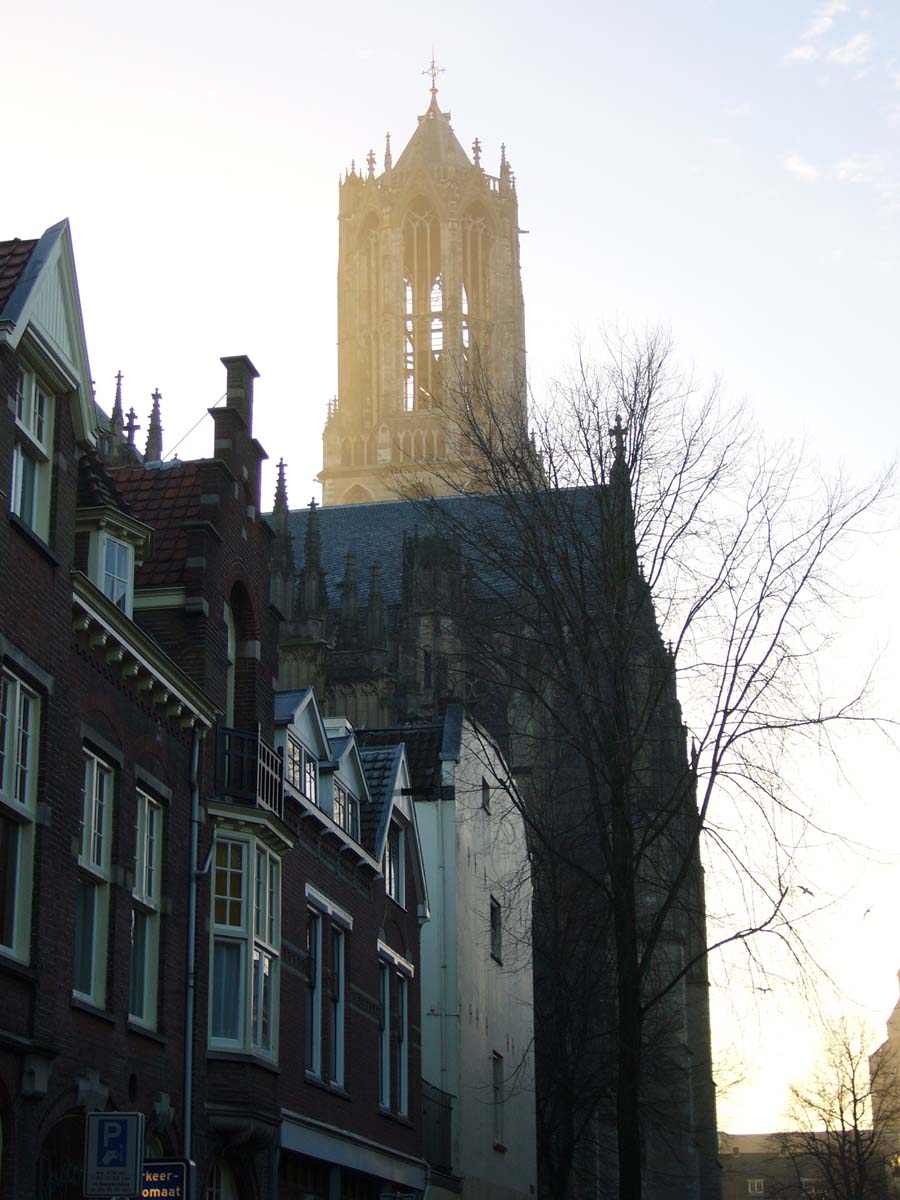
In fact, I did my undergraduate degree and a Master’s degree at Utrecht University, where I also worked as a language assistant for a while. In all the years that I commuted between my (nearby) hometown and Utrecht, I’ve never grown tired of walking the streets of this beautiful city – in all seasons and weather conditions!
So why not apply to this new vacancy for a permanent fulltime position in the Italian Studies section?! Candidates must hold a PhD in Italian Studies or a comparable field, have ample teaching experience in Italian Studies at undergraduate and graduate levels, and hold an advanced publication record.
But here comes the tricky part: you will have to be able to teach in Dutch! Fear not, though, as international candidates will be helped to acquire proficiency in Dutch in the first two years of their appointment. And if you send me your application for a revision or a translation, you’ll not only get a 10% discount but I will also throw in a free online chat where I’ll teach you a few basic Dutch expressions!
Deadline for applications is 26 February 2023.
For quotes and information, contact me via the form below.
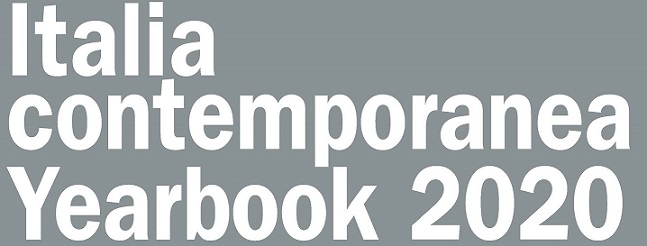
Last year, I was invited to translate the very first edition of the Italia Contemporanea Yearbook 2020, a selection of historical articles originally published in Italian in the journal Italia Contemporanea. It appears the editors were happy with my work, because they asked me to translate the second edition, which has just been published.
The new Yearbook covers a very broad range of topics as well as different historiographical and methodological approaches. More importantly, it presents original research that exceeds national boundaries, highlighting connections and interactions with Germany, Libya, Algeria and the Unites States. As such, it manages to overcome a common problem for editors of similar journals, as the editors explain in their introduction, namely that of reconciling “national, regional and local scales, offering a dynamic overview capable of locating themes and issues in the most appropriate contexts and restoring their interconnections — or even their deviations and specificities — in comparison to the global framework”.
As previously, all articles are freely available, which greatly contributes to the international exchange among scholars working on Italian history. Again, I am very proud to have been part of this project and hope that the publisher, FrancoAngeli, will continue to finance it.
You can access the TOC and download the Yearbook 2021 at this link
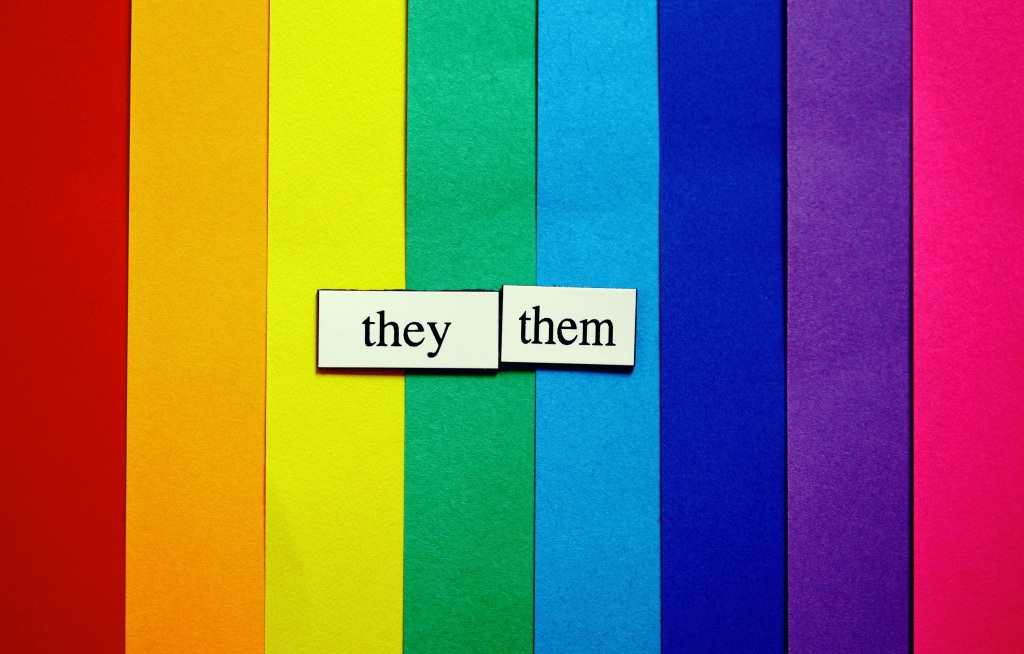
While it is true that English is less heavily gendered than, say, Romance languages, I believe that some nouns aren’t as gender-neutral as people like to believe.
In fact, is there even such a thing as gender neutrality? In this article, hosted by the Coffee & Cocktails Podcast, I explain why I think we can’t always rely on gender-neutral terms, and why I don’t believe holding space for all possibilities necessarily makes everyone happy.
Although we are by now well into the twenty-first century, when it comes to gender diversity we often seem to be lingering in the past. Multiple attempts to oppose an Italian lawagainst homophobia and transphobia are only the most recent expressions of this reluctance to acknowledge nonbinary gender identities.
Something is changing though. Gender inclusivity is increasingly making its way into the language we use. One way to promote gender inclusivity is to avoid making references to a person’s gender, unless it is pertinent to the discussion. Here’s what the Inclusive language guidelines of the Chartered Insurance Institute (CII) say on the matter:
Generally, descriptors that refer to personal attributes such as race, gender, sexual orientation, disability or age, for example, tend to over-emphasize the distinguishing attribute. We recommend avoiding the use of such descriptors unless they are relevant and valid.
Although proofreading is my main activity, I am occasionally asked to do Italian to English translations. Exactly one year ago, I was approached by the editor of one of Italy’s main history journals, Italia Contemporanea, with a request to translate 10 recently published articles for a completely new, English-language ‘Yearbook’.
The publication of the Yearbook vaguely coincides with the 70th anniversary of the institute that had launched the journal in 1949, the ‘Istituto nazionale per la storia del Movimento di Liberazione in Italia’ (National Institute for the history of the Liberation Movement in Italy). But the reason behind the decision to launch an English-language ‘Yearbook’ was another: whereas many libraries across Europe are subscribed to Italia contemporanea, historians who aren’t Italian native speakers don’t necessarily read Italian. It was therefore time to offer a new series of publications aimed specifically at an English-language audience.
To be fair, Italian scholars also tend to struggle with research published in other languages. I recall having to persuade an Italian contributor to a special issue (for a British journal) that I co-edited some years ago to at least mention a few relevant English-language publications, as the journal’s editor-in-chief had suggested. This absence was mainly due to the fact that the author didn’t read any English at all.
This is why I think both English-language and Italian-language journals should start offering selected translations, making them available in open access. Only thus, research outputs that would otherwise remain restricted to a specific audience will truly become available to a global readership. For now, Italia contemporanea has taken a first step in this direction, and I am extremely proud to have contributed to this endeavour – by no means an easy one, given the broad range of topics and the varying writing styles I was faced with.
I also strongly recommend anyone interested in Italian contemporary history to have a look at the Yearbook. It offers a very broad and versatile range of articles, from women’s political participation after WWI in the bordering cities of Fiume and Sušak to a gender-focused analysis of welfare history in Italy; from museum representations of the colonial past to the Italian ‘communist question’ in American foreign politics; from recent Italian historiography on 1968 to the relationship between deindustrialisation and industrial heritage in Italy.
And my favourite: the primary role (and struggles) of women translators in the translation industry between the two world wars. It’s amazing to see how certain things (like keeping translators on a financial leash) haven’t changed…
You can access the TOC and download the Yearbook at this link
It’s been a little over a year since the Covid-19 pandemic made its entrance on European soil. First stop: Italy. I still remember the day the first Italian victim was announced, one Friday in late February. I had just picked up my C2 English Proficiency certificate that morning, and as I started preparing my lunch I turned on the news, which was all about Covid.
Various lockdowns and millions of face masks on, it now seems like the worst is over. Perhaps we are soon to be “reborn with a flower”, as the Italian anti-Covid vaccination programme is called. But the consequences, I fear, will be felt for many years. Not just lives have been lost: jobs, businesses, (movie) theatres, archives, trade shows, festivals, street markets…everything has been affected. Our habits have changed, too, though hopefully not for good.
Although academia was hit as hard as other sectors, especially in the Humanities, as a proofreader/translator I haven’t suffered the consequences too much. On the contrary, several returning clients and word of mouth have kept me busy for most of the past 15 months. In fact, this must have been the busiest year of my post-academic career so far!
This has also meant not being able to write new blog posts. But, now that I’ve had a chance to take a (much needed) rest, I plan to make up for this absence, starting with a new post coming up soon, on gendered language in academic writing: is gender neutrality really the key?
In the meantime, if you’ve missed any of my older posts, please check out the archive below.
19% proofreading discount on academic texts (Humanities and Social Sciences)
As a former academic and published author, I particularly empathize with higher education staff and students in these difficult times. Job interviews cancelled, fixed-term contracts not being renewed, archives closed…It’s a proper mess!
But the pressure to publish remains.
If you need a reliable and flexible proofreader, I am offering a 19% discount on proofreading jobs – in the fields of Humanities and Social Sciences only.
New round of posts about the “fabulous four” core activities in academia: writing, teaching, research, and dissemination. Episode 4: teaching.
Covid-19. A curse, or an opportunity to change the endemic casualisation of higher education?
It’s no secret that the UK’s higher education system heavily depends on temporary staff. I’m sure you’ve all had to plough through job offers to find anything that wasn’t a ‘part-time’, ‘fixed-term’, or ‘zero hours’ contract.
A survey conducted by the University and College Union (UCU) in early 2019 estimated that “around 70% of the 49,000 researchers in the [higher education] sector remain on fixed-term contracts”, whereas 37,000 teaching staff was found to be on fixed-term, hourly paid contracts (p. 3).
And these are only the official numbers: a further 71,000 – again, mostly hourly paid – teachers are apparently employed as ‘atypical academics’ but without being counted in the main staff record. UCU also estimated that “most universities rely on hourly paid staff to deliver around 25% of their undergraduate teaching” (p. 8).
What is perhaps most disconcerting is that this situation involves some of the most prestigious universities in the country: “In 2016/17 there were 71,960 atypical academics employed in UK universities, 50% of whom were employed in the ‘elite’ Russell Group of universities” (p. 7).
Needless to add that these atypical academics included many PhD students. In fact, there’s a real hunt for casual workforce in higher education, and PhD students seem to be the easiest prey, eager as they are to gain teaching experience and, hey, who knows, maybe even get a foot in the door. Money is also an issue, especially for unfunded students.
As much as I support the idea of offering students the opportunity to gain teaching experience during their PhD, most of the time it only reflects a department’s need to resolve structural problems. This is hardly good for its stability and continuity, and potentially damaging for the PhD students, who will likely find themselves struggling to complete their PhD within the set timeframe.
Universities also don’t always give PhD students proper training before they enter the classroom, which can impact on the quality of teaching, and potentially on the students’ self-esteem.
Last but not least, allowing only some PhD students within a department to teach can create hierarchies between students, with some having access to an office while others are forced to roam computer rooms and libraries in search for a study space.
This can be highly exclusionary. I didn’t teach during my PhD, and had no access to office space or staff printing services. When I once had to ask a fellow PhD student and teaching assistant for the printer/copier code (to assist a conference attendant), she snobbishly walked off to make the photocopies herself. The thought that she was worried I might make improper use of her code deeply saddened me.
Early career researchers are another easy target. I had to teach up to 5 hours per week as part of a 3-year postdoctoral fellowship. I won’t say I was exploited, but I did spend a hell lot more than 5 hours on my teaching: course design and preparation, exam supervision, oral examinations, marking, honours supervision, feedback forms – it was a lot more than I had bargained for! By way of expressing gratitude, the department eventually forgot to mention me in a list of recently departed staff, in a School Newsletter published shortly after my fellowship ended. As if I’d never been there.
If this is the status quo, then just imagine the situation now, with the Coronavirus raging across the globe. What has been a long-term problem is now exploding in everyone’s face. Permanent staff is forced to shift to online teaching or being furloughed, something that isn’t guaranteed though for casual workers on short-term or zero hours contracts.
The universities of Bristol, Newcastle and Sussex set a sad record in this perspective, as they made staff on fixed-term contracts redundant, or simply did not renew their employment.
The crisis is also affecting young researchers, with funding schemes or job vacancies being cancelled “due to Covid 19”, for example. Fortunately not all funding bodies resort to these extreme measures: the British Academy has just published its call for BA/Leverhulme Small Research Grants 2020-21, extending the latest project start date in order to provide flexibility in response to the Covid-19 pandemic.
It is difficult to predict how this will all work out. Some universities seem to be taking on a more responsible attitude, and the UK Research and Innovation (UKRI) has just announced that funded doctoral students who have been impacted by Covid-19 will receive an extension to their research with additional grants, to complete their studies by 31 March 2021. There are also various petitions calling for more sustained support of casual workers (here’s one from the @CoronaContract).
Obviously the emergency situation requires immediate action, which may not have a long-term impact. Still, if the academic community manages to keep the pressure on government and institutions way beyond the crisis, perhaps Covid-19 could have some positive outcomes as well.
In the meantime…maybe it would be an idea to set up a platform (a blog, a webpage) where people can post their experiences of cancelled job interviews, funding schemes, and so on. It might give a clearer indication of the vastness of the problem, and perhaps offer a starting point for a nationwide campaign against the endemic casualisation of higher education in the long run.




 Your Editing Alternative